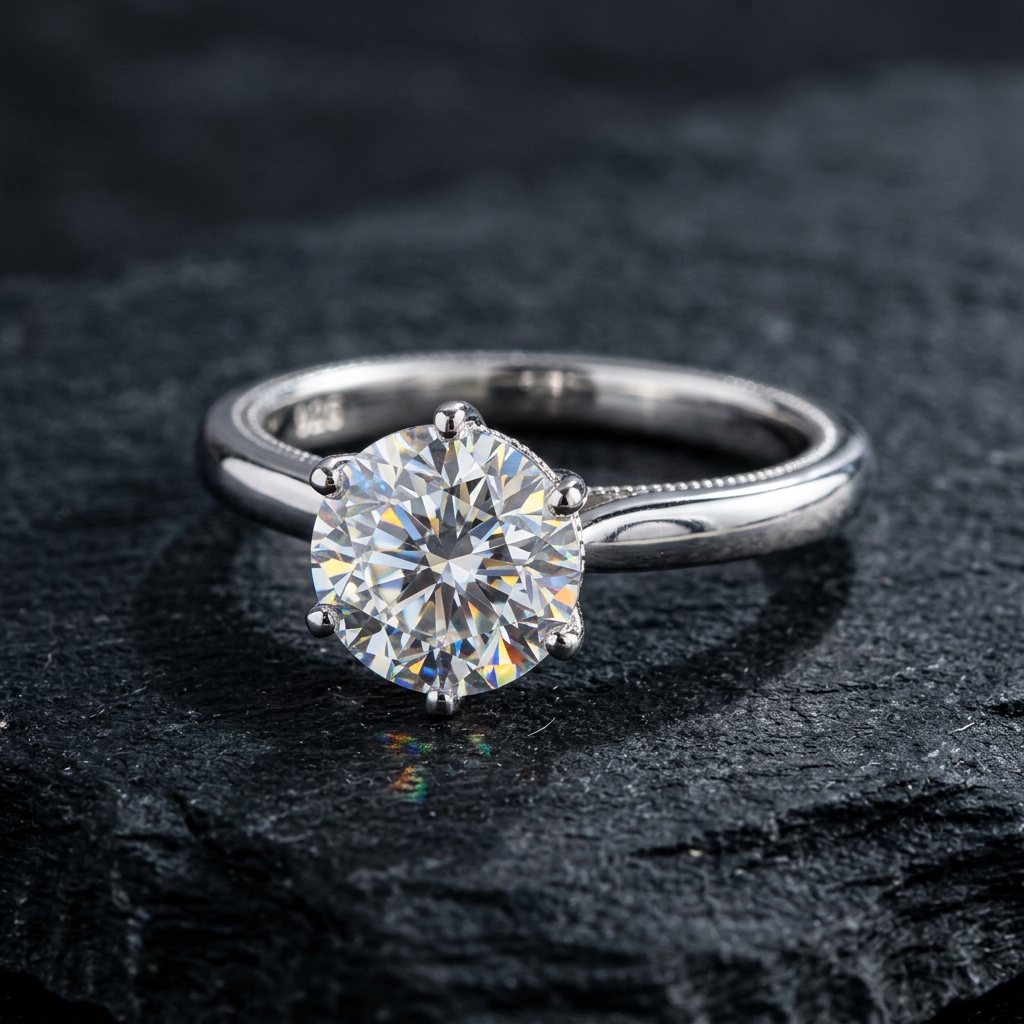
Choosing a gemstone today is no longer limited to natural diamonds. Advances in gem technology have made lab-grown diamonds and moissanite widely available, giving buyers more choices than ever before.
Every gemstone offers a different balance of appearance, durability, rarity, craftsmanship, and price. The right choice depends less on the gemstone itself and more on what you value most. Whether you're looking for a timeless heirloom, the classic characteristics of a diamond, or exceptional brilliance with outstanding everyday performance, each option has its own strengths.
This guide compares all three gemstones using objective gemological criteria rather than marketing claims, helping you choose with confidence based on your priorities.
Understanding the Three Stones
Before comparing them, it's important to understand what each gemstone actually is.
| Stone | Chemical Composition | Origin | Gem Classification |
|---|---|---|---|
| Natural Diamond | Carbon (C) | Formed naturally under high pressure over billions of years | Diamond |
| Lab-Grown Diamond | Carbon (C) | Produced in laboratories using HPHT or CVD methods | Diamond |
| Moissanite | Silicon Carbide (SiC) | Laboratory-created | Independent Gemstone |
The most important distinction is that both natural and lab-grown diamonds are genuine diamonds. They share the same crystal structure, chemical composition, and physical properties, differing only in how they are formed.
Moissanite is not a diamond—and it isn't intended to be one. It is a remarkable gemstone in its own right, appreciated for its exceptional brilliance, durability, and modern appeal.
Comparison Methodology
To keep this comparison objective, each gemstone is evaluated using measurable gemological characteristics rather than personal preference.
| Evaluation Criterion | Measurement Basis |
|---|---|
| Hardness | Mohs Hardness Scale |
| Brilliance | Refractive Index |
| Fire | Optical Dispersion |
| Durability | Resistance to scratching and daily wear |
| Rarity | Natural availability |
| Initial Purchase Cost | Relative market pricing |
| Long-Term Value | Historical resale behaviour |
| Visual Appearance | Human visual perception |
Physical Properties
| Property | Natural Diamond | Lab-Grown Diamond | Moissanite |
|---|---|---|---|
| Mohs Hardness | 10.0 | 10.0 | 9.25 |
| Refractive Index | 2.42 | 2.42 | 2.65–2.69 |
| Dispersion (Fire) | 0.044 | 0.044 | 0.104 |
| Thermal Conductivity | Excellent | Excellent | High |
| Suitable for Daily Wear | Yes | Yes | Yes |
Interpretation
Natural and lab-grown diamonds are physically identical. Moissanite offers excellent durability for everyday jewellery, ranking just below diamond on the Mohs Hardness Scale. Its higher refractive index and dispersion create exceptional brilliance and vibrant flashes of colour, giving it a distinctive visual personality that many modern jewellery lovers appreciate.
Optical Performance
The way a gemstone reflects light is often described simply as "sparkle," but gemologists evaluate it using three characteristics:
| Characteristic | Description |
|---|---|
| Brilliance | White light reflected back to the eye |
| Fire | Rainbow-coloured flashes created through dispersion |
| Scintillation | Sparkle produced as the gemstone or observer moves |
Diamonds are admired for their balanced combination of white brilliance and subtle fire. Moissanite is celebrated for its exceptionally lively brilliance and intense fire, producing vibrant flashes of colour that make it stand out beautifully under both natural and artificial lighting. Neither appearance is objectively better—they simply offer different aesthetics, allowing you to choose the style that appeals most to you.
Optical Dispersion (Fire)
Dispersion measures how strongly a gemstone separates white light into spectral colours. Higher values produce more colourful flashes of light.
Higher dispersion doesn't indicate a superior gemstone—it simply creates a different visual experience. Some people prefer the classic elegance of diamond, while others love the vibrant brilliance that makes moissanite instantly eye-catching.
Durability
For jewellery intended to be worn every day, durability is one of the most important considerations.
| Characteristic | Natural Diamond | Lab Diamond | Moissanite |
|---|---|---|---|
| Scratch Resistance | Excellent | Excellent | Excellent for Everyday Wear |
| Suitable for Engagement Rings | Yes | Yes | Yes |
| Suitable for Daily Wear | Yes | Yes | Yes |
Although diamond ranks highest on the Mohs Hardness Scale, moissanite's hardness of 9.25 places it among the hardest gemstones used in jewellery, making it exceptionally resistant to everyday wear and an excellent choice for rings, earrings, pendants, and bracelets designed to last for years.
Value Proposition
| Stone | Typical Cost* | Ideal Buyer |
|---|---|---|
| Natural Diamond | Highest | Those who value rarity and natural origin |
| Lab-Grown Diamond | Moderate | Those seeking diamond characteristics with lower upfront cost |
| Moissanite | Exceptional Value | Those seeking outstanding brilliance, durability, and modern luxury |
*Relative comparison using a natural diamond as the benchmark.
Rather than viewing price as a measure of quality, it's more helpful to think about overall value. Natural diamonds command premium prices because of their rarity and natural formation. Lab-grown diamonds provide the same physical characteristics as natural diamonds at a lower purchase price. Moissanite offers an exceptional combination of beauty, durability, and craftsmanship, making it an outstanding choice for buyers who want a luxurious-looking gemstone with impressive everyday performance.
Long-Term Ownership
It's important to distinguish between the enjoyment of wearing a gemstone and its potential resale value.
| Consideration | Natural Diamond | Lab Diamond | Moissanite |
|---|---|---|---|
| Natural Rarity | High | Low | Low |
| Supply Growth | Limited | Increasing | Increasing |
| Historical Resale Market | Established | Developing | Limited |
| Purchased Primarily As | Luxury Jewellery & Heirlooms | Luxury Jewellery | Fine Fashion & Everyday Luxury Jewellery |
Most jewellery is purchased for its emotional significance, craftsmanship, and the memories it represents rather than as a financial investment. If long-term resale value is a primary consideration, natural diamonds have historically maintained stronger secondary markets. However, if your priority is enjoying beautiful jewellery every day, all three gemstones offer lasting satisfaction in different ways.
Choosing the Right Stone
| If your priority is... | Recommended Choice | Why |
|---|---|---|
| Natural rarity and heritage | Natural Diamond | Formed naturally over billions of years |
| Diamond characteristics with lower upfront cost | Lab-Grown Diamond | Identical physical properties to natural diamonds |
| Exceptional brilliance and everyday luxury | Moissanite | Outstanding fire, durability, and remarkable visual appeal |
| Daily wear | Any of the three | All are highly suitable for regular use |
| Maximum beauty within your budget | Moissanite | Allows greater design flexibility and larger, more brilliant centre stones |
Common Misconceptions
| Statement | Verdict | Explanation |
|---|---|---|
| Lab-grown diamonds are fake diamonds. | False | They are chemically and structurally identical to natural diamonds. |
| Moissanite is a fake diamond. | False | It is a unique gemstone with its own optical and physical characteristics. |
| Diamonds are guaranteed investments. | Misleading | Resale value depends on quality, certification, demand, and market conditions. |
| Lab-grown diamonds are less durable. | False | They have the same hardness and crystal structure as natural diamonds. |
| Moissanite is only chosen because of price. | False | Many buyers intentionally choose moissanite for its exceptional brilliance, durability, ethical production, and distinctive appearance. |
Final Thoughts
There is no universally "best" gemstone—only the one that best matches your personal preferences and lifestyle.
Choose a natural diamond if you value geological rarity, heritage, and the story of a gemstone formed over billions of years.
Choose a lab-grown diamond if you want the physical characteristics of a diamond while reducing the initial purchase cost.
Choose moissanite if you're looking for exceptional brilliance, remarkable durability, and outstanding everyday luxury in a gemstone that's designed to be worn and admired for years to come.
The most meaningful jewellery isn't defined by the gemstone alone—it's defined by the memories, emotions, and moments it represents. The right choice is the one that feels right for you.
The information in this guide is based on established gemological principles, including the Mohs Hardness Scale, refractive index, optical dispersion, and industry-recognized standards used by professional gemological laboratories. The purpose of this comparison is to educate, not persuade, so that every customer can make an informed decision with confidence.— Editorial Note